
If you want to explore Agentic AI beyond theory, join us on Tuesday, March 31, at Sofitel Athens Airport, where we’ll discuss how these new intelligent systems are beginning to transform the future of business!
The honeymoon phase of generative AI — where we were all simply amazed that a machine could write a decent poem or summarize a meeting — is officially over. As we move through 2026, the dust is finally settling, and the silhouette of what comes next is clear: we are entering the era of agentic AI.
The executive shift
It was recently reported in the news that Mark Zuckerberg (CEO of Meta) has built a custom internal AI agent, described as an early in-house version of the rapidly growing open-source OpenClaw framework. To put it simply, OpenClaw is an open-source toolkit that allows anyone to build their own AI agent that lives on their own computer or server rather than in the cloud. Think of it as a personal AIthat can actually do things: it can read your files, send emails, browse the web, and even run system commands to finish complex tasks for you. Such AI agents are expected to become standard tools for executives by processing vast internal data in real time, eliminating information bottlenecks, and delivering instant insights on complex operational questions.
A dramatic 90% reduction in roles focused on information synthesis is predicted within five years, with humans shifting toward political judgment and oversight. By 2027, boards may very well question any CEO not utilizing similar AI capabilities.
Personal productivity vs. enterprise orchestration
We are seeing a clear divide in how these tools are deployed. On one hand, frameworks like OpenClaw are becoming the new ChatGPT for personal productivity. They are fantastic for individual tasks — reading files, browsing the web, and automating routine personal workflows. However, as foundational models improve, these simple, single-task agents are quickly becoming commoditized.
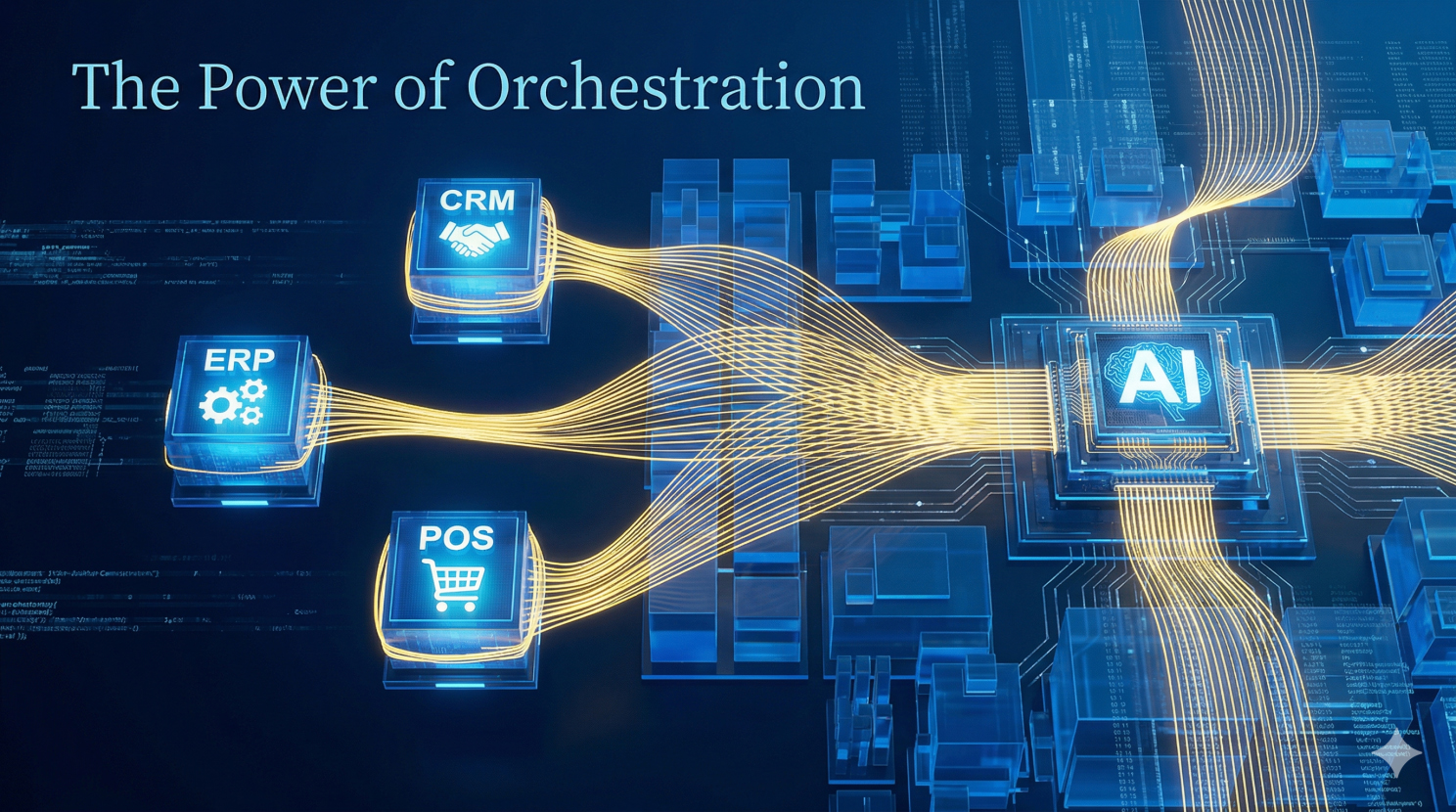
The real strategic moat though for a business lies in mastering complex multi-agent orchestration.While personal agents are great for the individual, enterprise-grade Agentic AI platforms are required when you need deep integration with existing software like CRM, ERP, POS, and e-commerce systems. These high-value orchestrations require industry-specific logic and domain expertise that a generic personal assistant simply cannot replicate. For example, at Pobuca, we are seeing massive demand for B2B Agentic CRMs — systems where agents monitor communications and automatically update records because human reps have no time to do it.
This level of integration is where AI moves from a handy tool to a core operational capability.
The great equalizer for SMEs
This transformation isn’t reserved for tech giants; it represents a historic opportunity for Small and Medium Enterprises (SMEs) to bridge the gap with large corporations. Historically, the barrier to sophisticated CRM platforms wasn’t just the price of the software — it was the cost of the experts needed to operate it. Most SMEs simply couldn’t justify hiring a team to manage complex enterprise systems.
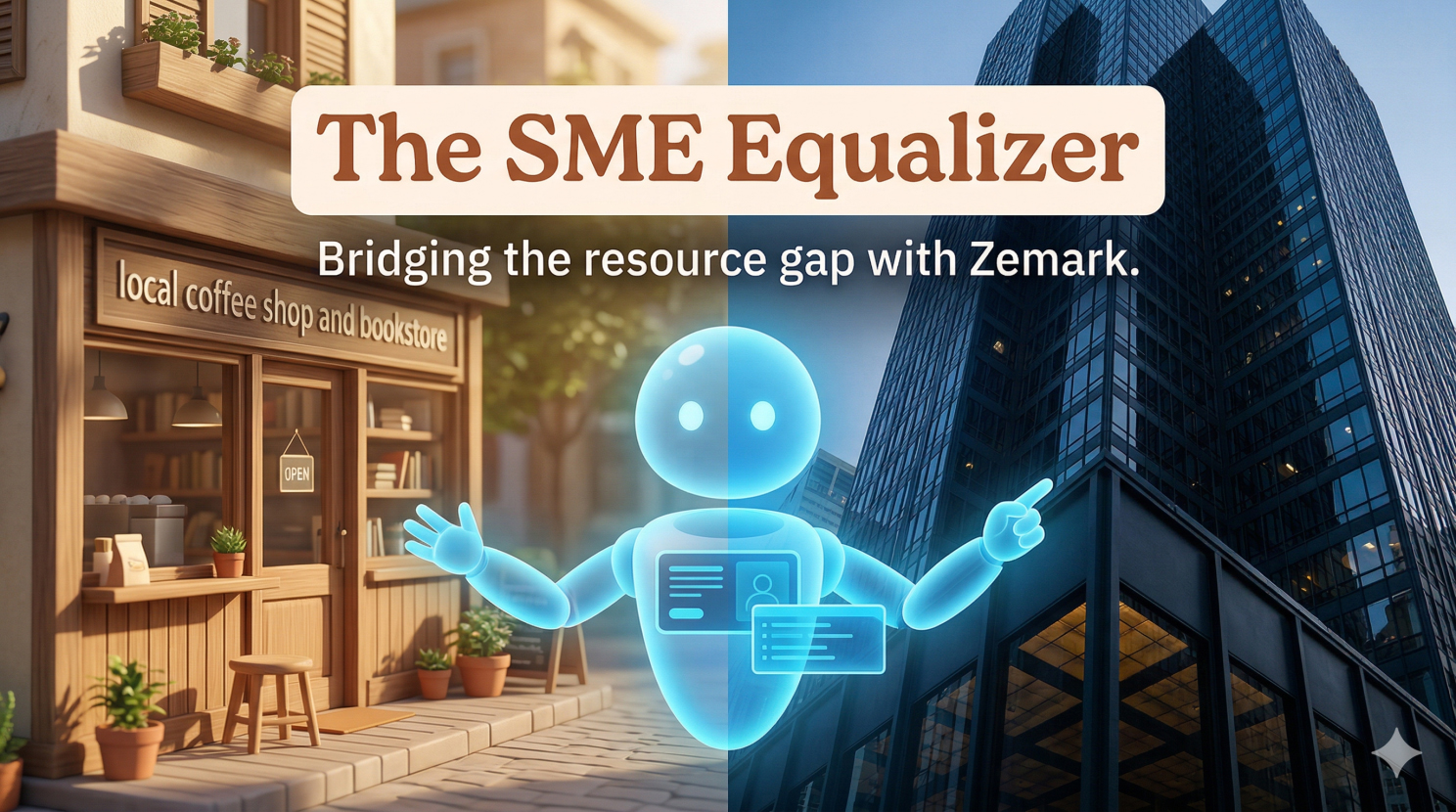
Today, even an SME can deploy an AI-native CX agent like Zemark to handle customer engagement, and loyalty with a level of sophistication that used to belong only to big enterprises.
Because these agents are designed to be self-service and conversational, the AI itself guides the setup and optimization, making high-level strategy feasible at a fraction of the traditional cost.
The 10x company vision
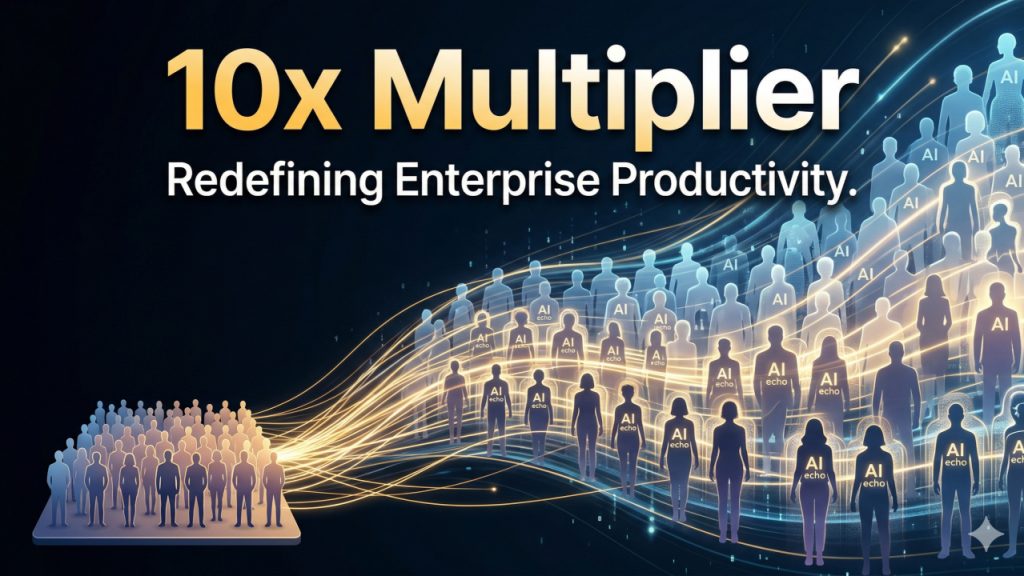
The ultimate goal of this strategy is what we call the 10x Company. The ambition is for a team of 100 people to operate with the output and reach of a 1000-person organization — a multiplier powered by AI augmentation. This isn’t about replacing people — it’s about amplifying them. The result? Up to 40–60% less manual “information work”. And this is just the beginning. We are practicing this internally at Pobuca because we believe you cannot credibly sell AI transformation without living it.
The companies that move decisively to embrace this autonomy in 2026 will define the next decade of business productivity. The question is no longer what AI can say to you, but what your AI agents can do for you.